
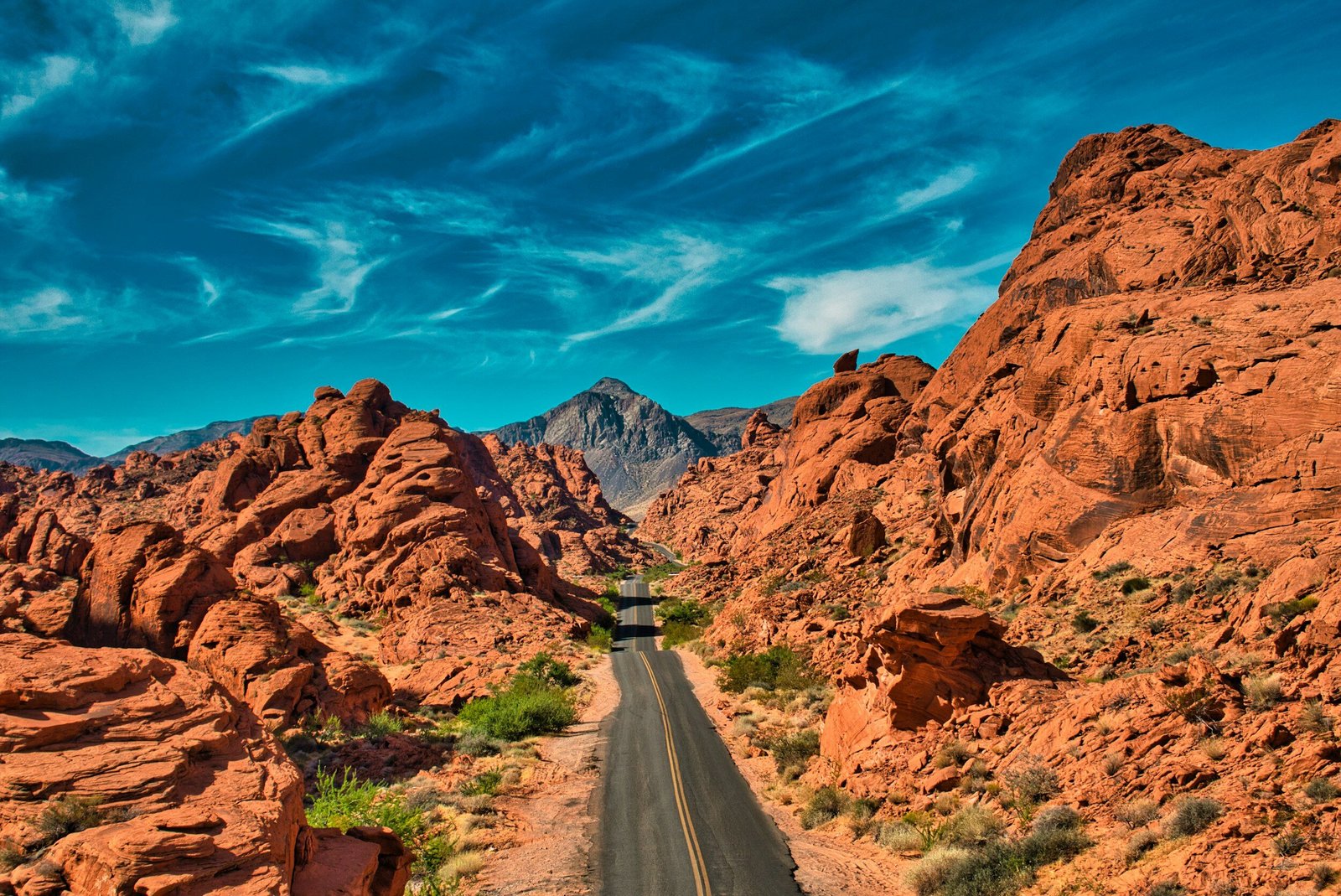
The Pahranagat Valley is a green strip along US-93 in southern Lincoln County — Alamo, Hiko, and the ranches between them — roughly ninety miles north of Las Vegas through empty country.
Close enough to the city to make the drive occasionally. Far enough that nobody does it weekly for an appointment.
The distance problem, quantified
A fifty-minute session in Las Vegas costs a Pahranagat Valley household roughly four hours of driving plus fuel plus whatever it takes to cover the work or the kids.
Weekly, for four months, that is a serious commitment. So people either do not start, or they start and quietly stop around session five — which is exactly when most treatments are beginning to work.
Removing the drive is not a convenience improvement. For evidence-based treatments that assume weekly frequency, it is what makes the treatment viable.
Agricultural stress, which is its own category
Ranching and farming carry a stress profile unlike most occupations, and it is one of the least served by conventional mental health care.
Almost nothing is under your control. Weather, water, prices, equipment, disease. You can do everything right and lose the year.
Work and home are the same place. The thing you are worried about is visible out the window at all hours.
Financial exposure is enormous and slow. Debt measured in years, capital tied up in land, a single bad season capable of undoing a decade.
Generational weight. When the operation has been in the family for four generations, a decision to sell is not a business decision — it feels like failing people who are buried nearby.
Water uncertainty, which in Nevada sits underneath everything and never fully resolves. Chronic unresolvable threat is considerably harder on a body than a known bad outcome.
The signs families notice
- Someone who used to talk has gone quiet
- Uncharacteristic mistakes on tasks done a thousand times
- Drinking that has moved earlier in the day
- Maintenance let go that would never previously have been let go
- Talk about the family being better off, or things being "handled"
- Sudden calm after a long stretch of visible strain
That last one deserves attention. If you see it, ask directly — asking about suicide does not plant the idea, and it usually produces relief.
Agricultural occupations carry consistently elevated suicide rates nationally, and Nevada's overall rate runs above the national average. Where someone is struggling, temporarily storing firearms with a trusted person is a straightforward, reversible protective step that many ranch families take without fuss.
988 is free and answered any hour by call or text.
What is worth doing
Separate what you control from what you do not. A great deal of agricultural anxiety goes to variables no amount of worry moves. Getting deliberate about where effort goes is not resignation; it is the difference between planning and rumination.
Write the contingency down. A fear rehearsed nightly is far more corrosive than a written plan for a bad year.
Talk to someone outside the valley. In a community this size, reluctance to be seen struggling is rational — it affects credit, leases, and standing. An outside therapist costs you nothing socially.
Deal with the sleep, which is usually first to go and one of the fastest levers available.
Treat depression as a condition. It responds to treatment. Trying harder is not a treatment.
For the spouse
Agricultural stress lands on the whole household. Partners frequently carry the books, the off-farm job that provides the insurance, and the emotional weather of someone under sustained pressure — and are rarely asked how they are doing.
Individual and couples sessions are both available, and for many families the couples work is what actually shifts things.
The practical arrangements
We are licensed in Nevada and provide secure video sessions statewide, including Alamo, Hiko, Ash Springs, Caliente, and southern Lincoln County. Sessions work from the house, the shop, or a parked truck, and can be scheduled around the work rather than the reverse.
We are in network with most major insurance plans. We do not accept Medicaid plans. Nevada Medicaid does cover behavioral health with no copay for most enrollees, and eligibility is income-based through participating providers. Self-pay is $150 with licensed clinicians, $125 with associate clinicians, and $25 to $60 with a graduate-level clinician.
For the rest of the household
We work with adults, adolescents, children from age three, couples, and families. In small rural communities, adolescents in particular benefit from video sessions — no waiting room, no chance of being seen, and Nevada law allows minors twelve and older to consent to their own care.
A hard year is not a verdict on a person
The most useful thing many producers hear is exactly that.
If it has been heavier than you have said out loud, book a session.