

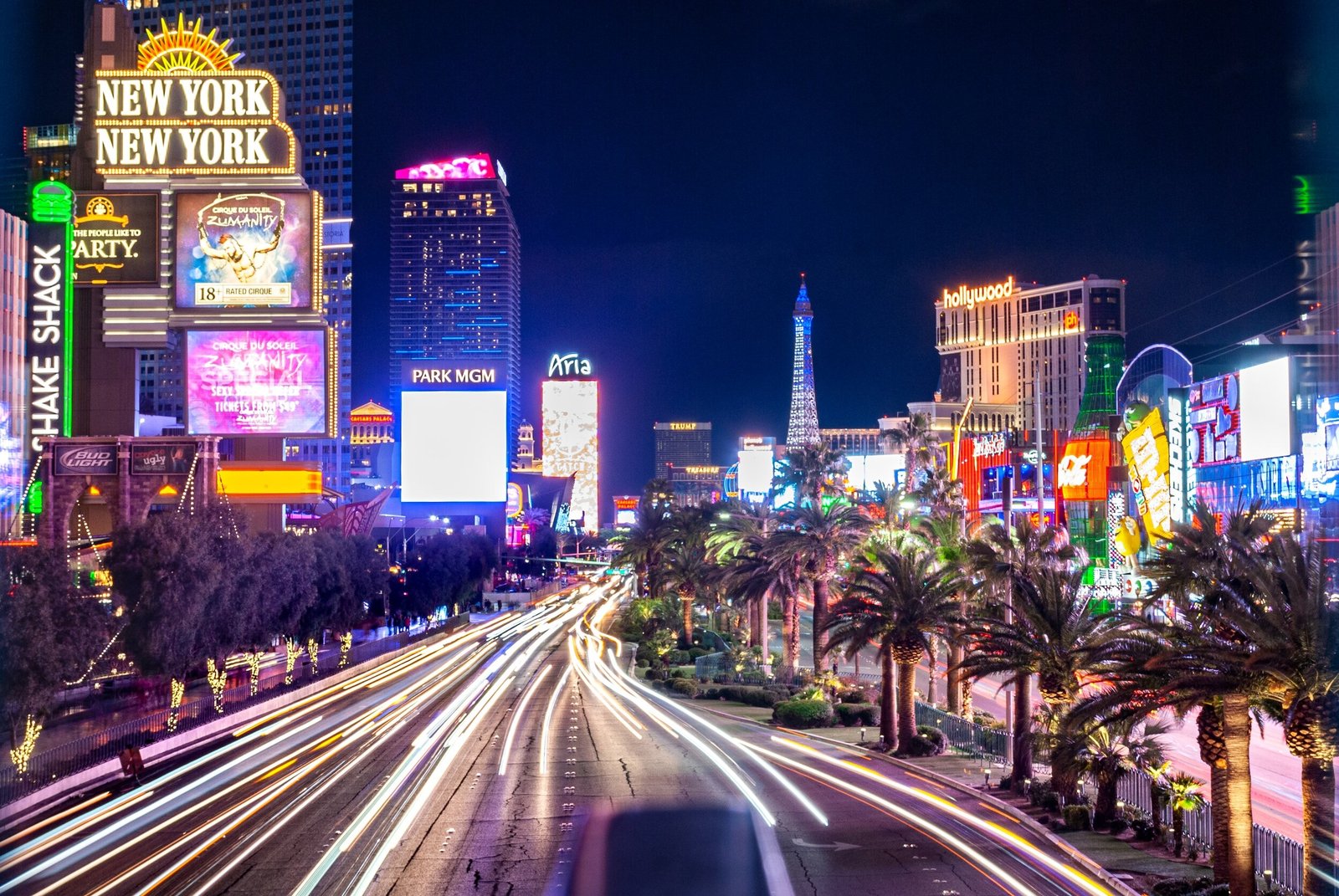
The first full week of January, the valley absorbs a small city's worth of people carrying badges. Rideshare wait times triple. The Convention Center loop is at capacity. Every restaurant within a mile of a venue is booked. And a large share of Las Vegas residents spend the week either working the show or trying to avoid it.
CES is the biggest, but it is not alone: the trade show calendar here runs most of the year — construction, broadcast, hospitality, health, gaming, jewelry, and dozens more. Convention season is not an event. It is a recurring condition of living here.
Two different kinds of exhaustion
It is worth separating them, because they need different responses.
If you work the shows, the exhaustion is performance-based. Twelve-hour days on concrete, being pleasant to thousands of people, hitting sales targets, eating badly, sleeping little. This is acute overwork with a defined end date.
If you just live here, the exhaustion is environmental. Nothing you did got harder, but everything took longer, was more crowded, and required more decisions. This is a low-grade, all-week drain that people often do not credit as real, and then wonder why they are wrecked by Friday.
Both are legitimate. Neither is a character flaw.
Overstimulation, explained without the mysticism
Your brain filters an enormous amount of sensory input continuously — noise, motion, light, faces, decisions. That filtering costs energy. Crowd density raises the cost sharply, because human faces and movement demand more processing than almost anything else.
When the cost exceeds your available capacity, you get the familiar cluster: irritability, difficulty finding words, a headache behind the eyes, an urgent need to leave, and afterward a flat, hollowed-out feeling.
Some people hit that ceiling much faster than others. Highly sensitive people, autistic adults, people with ADHD, people with anxiety disorders, and anyone with a migraine history reach it sooner. That is a difference in wiring, not in willpower, and it means convention week costs you more than it costs your neighbor.
A locals' plan for a heavy show week
Move your errands to the edges. Groceries before 9 a.m., pharmacy on a Tuesday morning. Convention crowds have predictable rhythms and the mornings on the residential side of the valley stay normal.
Give up the Strip corridor entirely. Not as a sacrifice — as a decision made once, so you stop relitigating it every evening.
Add twenty minutes to everything and stop being surprised. Most convention-week frustration is the gap between expected and actual time. Close the gap in advance and the frustration mostly disappears.
Schedule recovery, don't hope for it. If you are working a show, block the two days after and defend them. If you are not, put one genuinely quiet evening mid-week on the calendar.
Use the west and north of the valley. Red Rock, the trails above Summerlin, the desert northwest — twenty minutes from most of the city and effectively empty during convention week. Time in low-stimulation natural environments measurably reduces physiological stress markers, and here it is available year-round.
If you work the show floor
A few things reliably help booth staff and event workers:
- Silence between conversations. Not scrolling — actual silence. Ninety seconds of no input resets more than a coffee does.
- Sunglasses and a walk outside once per shift. Daylight and a change of scale help your visual system stand down.
- A hard end to the evening. The client dinner is optional more often than people believe, and the cumulative sleep debt of a full show week is what produces the crash afterward.
- Watch the alcohol math. Trade show culture and this city together make heavy drinking the default. It will make every subsequent day of the show harder.
The January piece nobody mentions
CES lands in the first week of January, which is already the hardest stretch of the year for a lot of people — post-holiday letdown, less daylight, financial reckoning, resolutions collapsing. Then the city fills up.
If you find yourself unusually low in mid-January, it may not be the convention. It may be that the convention landed on top of something already present. Seasonal mood changes are real even in a sunny climate, and post-holiday depression is extremely common. Both are treatable, and January is a perfectly good month to start.
When overstimulation is a bigger pattern
Occasional overload during a convention week is normal. It is worth looking into if:
- You get overwhelmed in ordinary crowds — a grocery store, a school pickup line
- You cancel plans regularly to avoid stimulation and your world has shrunk
- Overload is followed by shutdown that lasts a day or more
- You have started to dread ordinary parts of life in this city
Those patterns point to something more specific — sensory sensitivity, an anxiety disorder, or undiagnosed neurodivergence — and each has real, targeted treatment.
Support that does not require crossing town
We provide secure telehealth throughout Nevada, which during convention week is the least stressful way to be seen. Our northwest office on N Durango Drive is well away from the resort corridor if you prefer in person, and we are in network with most major insurance plans.
If this city's rhythm has been costing you more than it should, book a session and let's build you something sturdier than white-knuckling it until Friday.