
Dayton has changed faster than most Nevada towns. New subdivisions where there was sagebrush, a commuter population that works in Carson City or Reno, and long-time residents watching a place they knew become something else.
Rapid growth is good for property values and hard on nervous systems — both for the people arriving into an unfamiliar community and for the ones who feel their town slipping away from them.
Anxiety is more common than people realize and more treatable
Anxiety disorders are the most common mental health conditions in the United States. They are also among the most responsive to treatment — frequently a matter of months rather than years.
That combination is worth stating plainly, because a lot of people carry anxiety for a decade assuming it is simply their personality.
Anxiety that does not announce itself
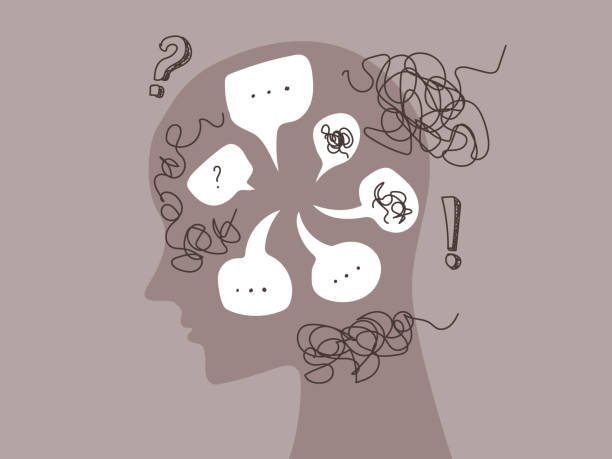
Plenty of people with anxiety would not describe themselves as anxious. What they report instead:
- Waking at 3 a.m. with the day already running
- A stomach or a jaw that reacts before the thought registers
- Rehearsing conversations that have not happened, sometimes for days
- Being unable to enjoy Sunday because of Monday
- Snapping at the people you like most
- Saying yes to everything and resenting all of it
- Checking things repeatedly — the door, the phone, the bank balance
The commuter piece
A large share of Dayton households drive to work in Carson City or Reno. That has specific effects that get absorbed as normal:
The commute is not recovery time. Most people spend it either rehearsing the day ahead or replaying the one behind. Two hours a day of rumination is a substantial anxiety input.
Weather adds a variable. Winter driving on this corridor introduces a genuine, recurring stressor from November onward.
Time gets squeezed at both ends. Leaving before the kids are up and getting back after homework has started produces a household where the parents are perpetually behind.
A practical intervention that works: use the drive deliberately rather than letting it be dead time. A specific playlist, a podcast that is not news, or ten minutes of silence with the radio off. The goal is to stop the commute being a rumination chamber.
How anxiety is actually treated
Cognitive behavioral therapy targets the specific mechanisms — overestimating danger, underestimating your ability to cope, and treating a possibility as a certainty. It is structured, practical, and has the strongest evidence base of any psychological treatment for anxiety.
Exposure work, where avoidance has begun to narrow your life. Graded, collaborative, and never a matter of being thrown into anything.
Physiological skills. Extended-exhale breathing, muscle release, grounding. These address the body's contribution, which for many people is where the experience actually lives.
Treating what is underneath, where the anxiety turns out to be attached to something specific — a trauma, a marriage, an untreated sleep problem, or a financial situation that genuinely warrants concern.
The two things that reliably make it worse
Caffeine, which most anxious people are using more of because they are tired from sleeping badly because they are anxious. Reducing it is unglamorous and frequently produces a noticeable difference within two weeks.
Alcohol, which reduces anxiety for about two hours and increases it substantially the following day. Anyone using a couple of drinks nightly to settle is paying for it with worse anxiety and worse sleep.
Neither of those is a moral point. They are just the two largest modifiable inputs.
Access in Lyon County
Nevada ranks last nationally for mental health care access, and rural counties have it hardest — the state's rural regions have far fewer clinicians per resident than Washoe or Clark.
Video sessions are the practical answer. We are licensed in Nevada and see clients statewide by secure telehealth, including Dayton, Mound House, Stagecoach, Silver Springs, and the Carson River corridor. That removes another drive from a week that already has too many.
Sessions work from home, from a parked vehicle, or from an office with the door shut. You need privacy and headphones, not silence.
Paying for it
We are in network with most major insurance plans, including Anthem Blue Cross Blue Shield, Aetna, Cigna, UnitedHealthcare, Health Plan of Nevada, and Silver Summit and Ambetter. We verify your benefits and tell you your expected cost before the first session.
Self-pay is $150 with licensed clinicians, $125 with associate clinicians, and $25 to $60 with a graduate-level clinician.
Reasons to pick up the phone
You do not need to be in crisis. Reasonable triggers: sleep disrupted for weeks, avoidance that has started shrinking your life, physical symptoms that keep coming back clear, drinking more to take the edge off, or worry that no longer responds to reassurance from people who love you.
If it is urgent tonight, 988 is answered any hour by call or text.
Book an appointment and let's get it treated rather than managed indefinitely.