

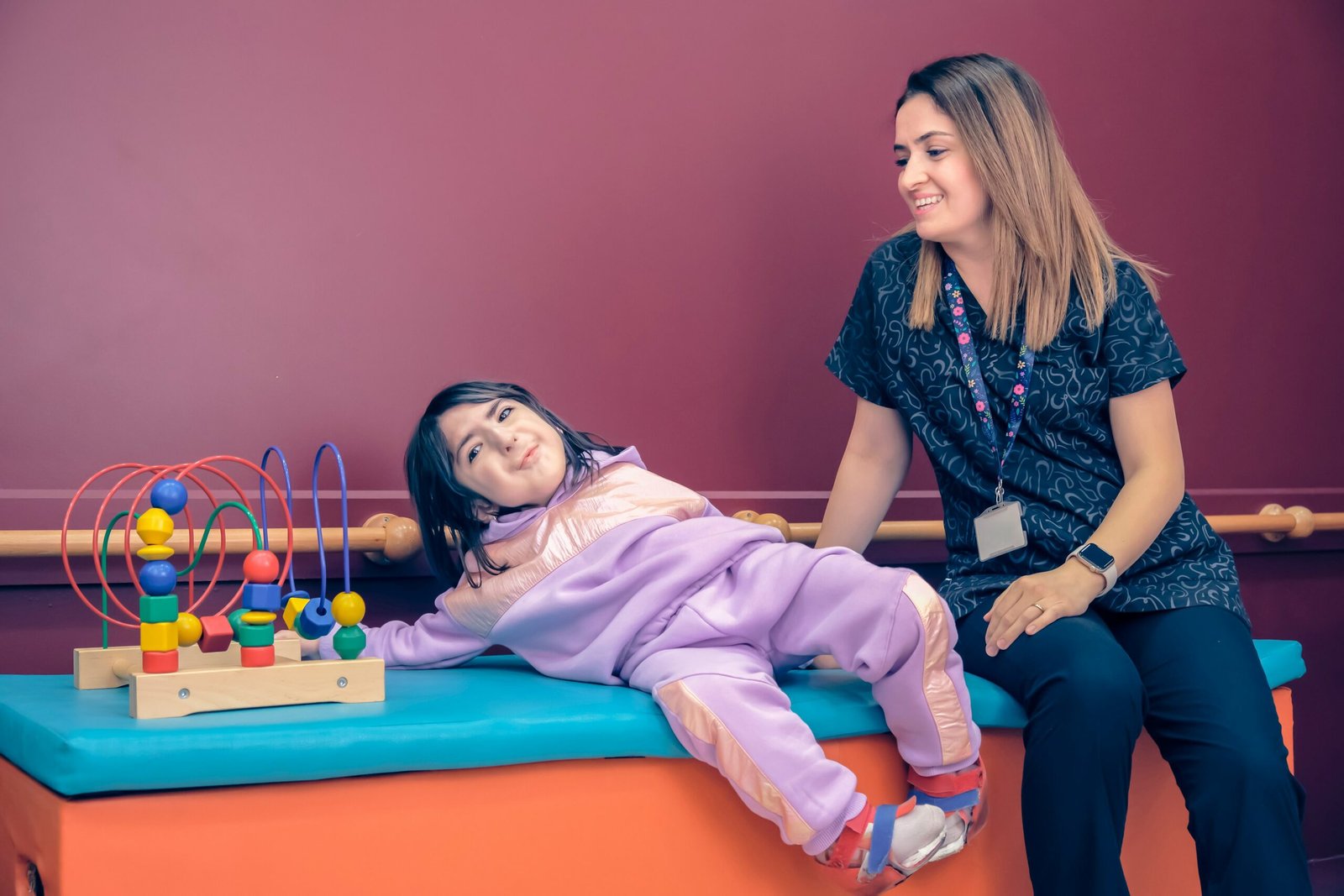
Skye Canyon is one of the newest parts of the Las Vegas valley — master-planned, family-heavy, and full of households that arrived within the last few years.
That demographic produces a specific pattern: a lot of young children, a lot of parents without extended family nearby, and a community where almost everyone is still building their support network.
Why talking is not how children process
Parents booking therapy for a six-year-old often imagine a smaller version of adult therapy — the child explaining their feelings and gaining insight.
Young children do not have the abstract language or the developmental capacity for that. Asking a five-year-old why they have been hitting produces a shrug, and it is not evasion; they genuinely do not have access to that answer.
What children do have is play. Play is how they process experience and express what they cannot say. A child who cannot describe what happens when their parents argue will show you with figures on a rug within ten minutes.
Play therapy uses that as the working medium. It is the treatment, not a way of keeping a child occupied until the real therapy starts.
What a session looks like
A room with materials — figures, sand, art supplies, blocks, puppets. A therapist who follows the child's lead rather than directing, watching for themes: what gets repeated, what gets destroyed, what gets rescued, what never gets mentioned.
Over weeks, patterns emerge. A child working through something frightening will often replay it repeatedly, changing the ending, until the material loses its charge.
For children roughly eight and up, sessions shift toward a mix — some talking, some art, some games with a purpose, some structured skills work.
Reasons children are referred
- Anxiety, including separation anxiety and school refusal
- Meltdowns well past the age they should have settled
- Grief, after a death, a pet, or a family separation
- Divorce and family change
- Trauma, including things that happened before the child could talk
- Behavior difficulties at school
- Sleep problems, nightmares, bedwetting after a dry period
- Social difficulty, or a child with no friends
- Selective mutism — talking freely at home and not at all at school
- Sensory sensitivity and neurodivergence-affirming support
Signs that warrant an assessment
Some behavior is developmental and passes. Get an assessment when you see:
- A change lasting more than a few weeks with no obvious cause
- Regression to behaviors they had outgrown
- Frequent stomachaches or headaches, medically cleared
- A child who has stopped enjoying what they loved
- Anything the school has raised more than once
- Any talk about not wanting to be alive, which does occur in young children and always warrants immediate attention
For that last one, 988 is answered any hour by call or text.
Why parents are in the treatment
The part that surprises people and the part that determines outcomes.
Research on child therapy consistently finds that parent involvement substantially improves results. In practice, most of what changes a young child's world is what the adults around them do differently.
So expect to be involved: separate parent sessions, coaching on responding to specific behaviors, and periodic reviews. You will not receive a transcript of your child's sessions — children need their own space — but you will not be left outside the process.
Expect also that some of the work will be about you. Not as blame. Because a dysregulated parent cannot regulate a dysregulated child, and the household's stress level is one of the most powerful variables available to change.
The newer-suburb factor
Communities like Skye Canyon have a particular profile worth naming.
Most families relocated. Which means no grandparents down the road, no established babysitting network, and parents doing an intensive job without the backup previous generations had.
Everyone is new. Good news, because other parents are actively looking for connection. It does mean community has to be built rather than inherited.
Everything requires driving. The valley is spread out and the northwest is at the edge of it, which for families with several children's activities adds up quickly.
Summer removes outdoor life for months, which changes the whole shape of a household's day between June and September.
Where sessions happen
Our N Durango Drive office is the closest of our locations to the northwest valley, and for young children in-person play therapy is generally the better format.
We also provide secure video anywhere in Nevada, which works well for parent coaching, for older children, and for adolescents — and parent-focused work alone frequently produces substantial change in a young child's behavior.
Our east valley office on E Russell Road is available if that suits a particular week.
Benefits, verified before you start
We are in network with most major insurance plans. We do not accept Medicaid plans. Nevada Medicaid does cover children's behavioral health with an unusually broad entitlement — children under 21 are covered for medically necessary services, a stronger standard than adult coverage through participating providers.
Self-pay is $150 with licensed clinicians and $125 with associate clinicians.
Why early intervention is genuinely smaller work
Children's difficulties respond faster than adults' do, because the patterns are less entrenched and the developing brain is more flexible. A problem addressed in first grade is a much smaller project than the same problem in seventh.
If something has changed in your child and you cannot explain it, book an appointment.