

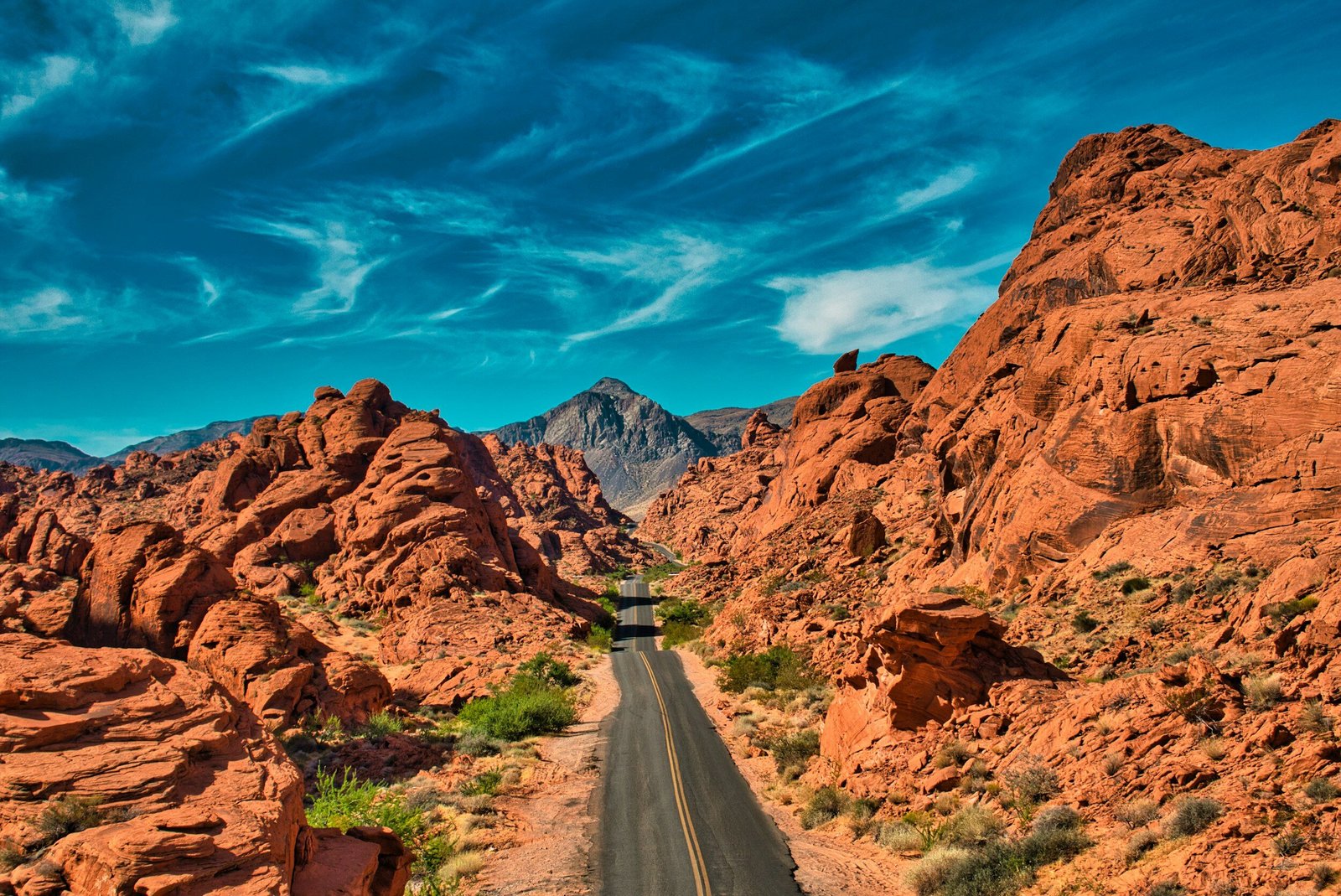
Baker sits at the foot of the Snake Range near the Utah line, a village of a few dozen people that serves as the gateway to Great Basin National Park. Ely is over an hour away. Salt Lake is several.
It is one of the most beautiful places in Nevada and one of the most genuinely remote.
Two populations, two different pressures
Year-round residents live with the full version of remoteness: a very small social pool, a long drive for groceries and medical care, and winters that reduce contact substantially.
Seasonal workers — park staff, hospitality, people who arrive for the summer — deal with a different pattern: intense months, quick friendships, and then an abrupt ending when the season closes and most people leave.
Both are legitimate reasons to need support, and both are underserved.
The nature paradox
People who live in places like this often hear that they should not be struggling, because look where you live.
Two things are true at once.
Time in natural environments has measurable, well-documented benefits — lower physiological stress markers, improved mood, better attention. Living beside a national park gives you access to that daily, and it is genuinely protective.
And a landscape cannot substitute for people. Beauty does not treat depression, and social isolation is a health risk regardless of the view. Those facts do not contradict each other, and being surrounded by extraordinary country while feeling low is not evidence of ingratitude.
What extreme remoteness actually does
The social pool is very small. If the handful of people nearby are not people you connect with, there is no other group. This is one of the hardest features of village life and it is rarely acknowledged.
Winter narrows everything. Weather, distance, and short days combine.
Every problem is amplified by distance. A medical appointment, a dental emergency, a school meeting — each becomes a day.
Leaving is a major undertaking, which means people stay in situations far longer than they would elsewhere.
Privacy is nonexistent and anonymity is impossible, which for anyone struggling is precisely the wrong combination.
Where we can be useful
Anxiety, depression, trauma and PTSD, grief, relationship and marriage difficulties, substance use, ADHD, life transitions, and the cumulative weight of isolation.
We work with adults, adolescents, children from age three, couples, and families, using structured evidence-based approaches — including time-limited trauma treatments and behavioral treatment for insomnia.
What telehealth realistically offers here
It works for ongoing therapy. The research on video-delivered treatment for anxiety, depression, and PTSD shows outcomes broadly comparable to in-person care.
It does not replace emergency services. In an acute crisis, 988 is answered any hour by call or text. For immediate danger, 911 — recognizing that response times in eastern White Pine County are long, which is a further argument for addressing things before they become emergencies.
It does not prescribe. Medication requires a physician or psychiatric provider; we coordinate rather than replace.
Connectivity is a genuine constraint in this part of the state. If video is unstable, sessions continue by audio, and audio sessions work.
Seasonal workers, specifically
If you are here for a season, a few things worth knowing.
The comedown when a season ends is predictable — a period of intense work and constant company gives way to quiet and no structure. People expect relief and often get flatness. That usually lifts within a couple of weeks; if it does not, that is worth treating.
Also worth knowing: a Nevada-licensed clinician can see you while you are physically in Nevada. If you leave the state at the end of the season, that changes what is possible, so it is better to plan a defined piece of work than to start something open-ended. Say so at booking and we will structure it accordingly.
Paying for sessions
We are in network with most major insurance plans. We do not accept Medicaid plans. Nevada Medicaid does cover behavioral health with no copay for most enrollees, and eligibility is income-based — seasonal and part-time workers frequently qualify through participating providers.
Self-pay is $150 with licensed clinicians, $125 with associate clinicians, and $25 to $60 with a graduate-level clinician.
The communities we reach
We are licensed in Nevada and provide secure video sessions statewide, including Baker, Garrison-adjacent Snake Valley communities on the Nevada side, Ely, McGill, and Lund.
Remote is not the same as unreachable
For a long time, living in a village this far out meant that ongoing mental health care was simply not on offer. That is no longer the case.
Book an appointment, or call or text 988 any hour if tonight is hard.