

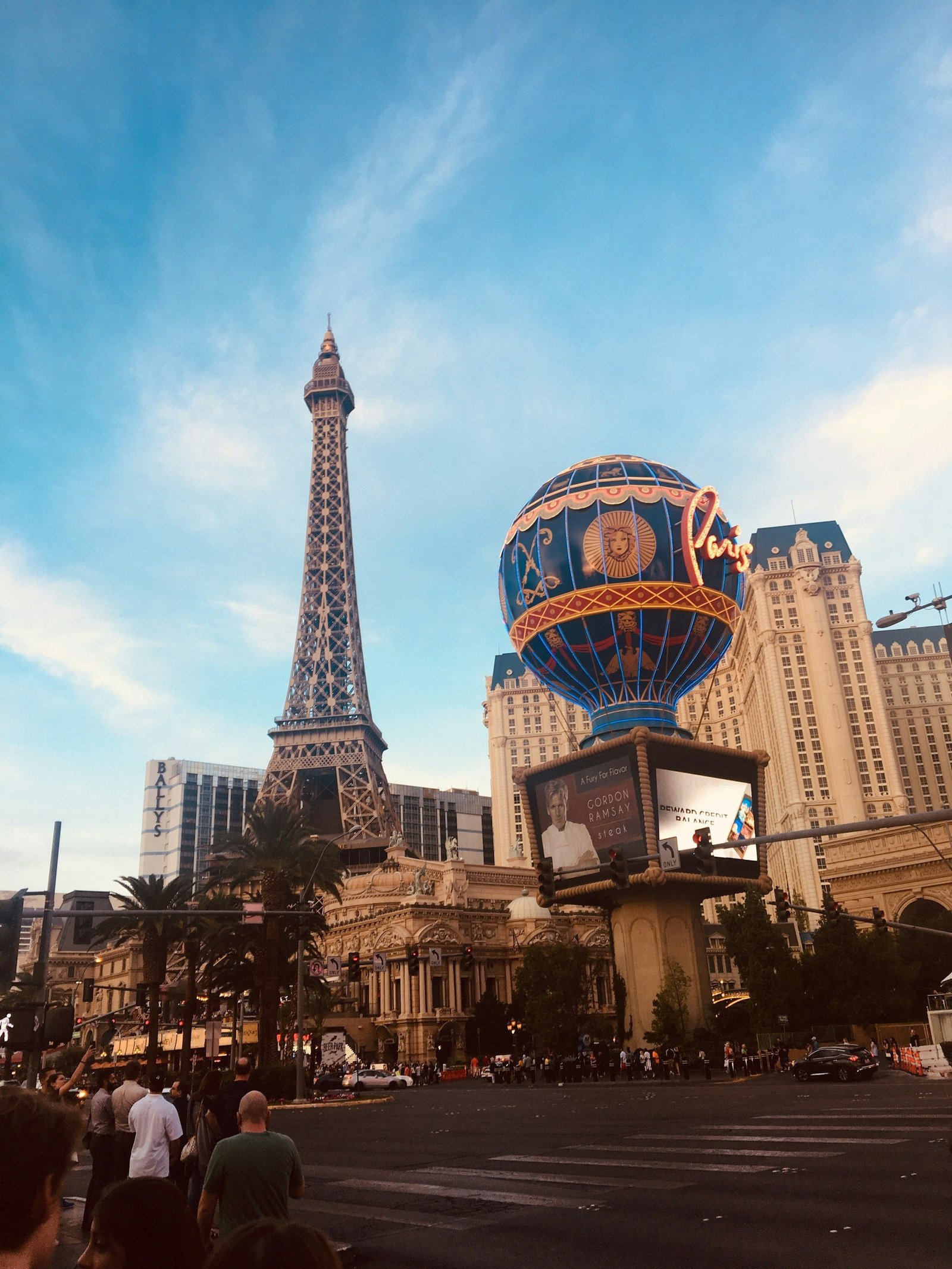
Every November, a few square miles of this city stop belonging to the people who live in it. Grandstands go up months in advance. Las Vegas Boulevard closes to public traffic in the evenings across race days and does not fully reopen until the small hours. Cross-Strip rides that normally cost fifteen dollars run five to ten times that during session changeovers. Locals who work along the circuit spend the week finding new ways to get to a job they have held for years.
Clark County has now committed to the race for the next decade. Whatever you think of that, it means this is an annual feature of life here, and it is worth having a plan for it that is not just gritting your teeth.
Why it lands harder than a normal busy weekend
Las Vegas residents are extremely used to tourism. Millions of visitors a year, conventions, New Year's Eve, fight weekends. So why does this particular event generate so much local frustration?
Because it removes something that big events usually leave intact: your ability to route around it.
Psychologically, the difference between stress you can navigate and stress you cannot is enormous. Predictable, controllable disruption is absorbed easily. Disruption that closes your street, changes nightly, and is enforced by barriers produces a much stronger response — not because people are fragile, but because loss of control is one of the most reliable triggers of a stress reaction there is.
Add the fact that the disruption is imposed for the benefit of visitors, and you get the specific emotional signature of Grand Prix week: not just stress, but resentment.
Who actually gets hit
Workers on or near the circuit. Servers, dealers, housekeepers, retail staff, and valet workers whose commute becomes a two-hour problem, often on shifts with no flexibility.
Rideshare and delivery drivers, whose maps break and whose earnings become unpredictable in both directions.
Small businesses along the layout, some of which have reported severe revenue losses during the race build and event window.
People with sensory sensitivities. The noise is genuinely extreme, and it carries. Autistic adults and children, people with PTSD who are sound-reactive, and anyone with migraine can have a hard week.
Residents on the east and west approaches, who get overflow traffic on surface streets for days.
A practical plan, made in advance
The single most protective thing is deciding early, because decisions made in traffic are worse decisions.
Pick your posture by mid-October. There are three honest options: leave town, lean in and go to something, or hunker down. Choose one deliberately. The people who suffer most are the ones who never chose and end up reacting all week.
Solve the commute before race week, not during. If you work on or near the circuit, talk to your supervisor in October about start times, parking, and whether any shifts can move. Get it in writing. Every year, the people who negotiate early do fine and the people who wait do not.
Stock the week. Groceries, prescriptions, gas, pet supplies before the closures start. This is boring and it removes about half the week's friction.
Protect sleep. Noise-canceling options, white noise, and a realistic expectation that some nights are loud. If you have a child or family member with sensory sensitivity, plan a quiet room and consider a night or two elsewhere in the valley.
Cap your exposure to the discourse. Local social media during race week is a firehose of anger. Reading it does not change the closures and it reliably raises your baseline irritation.
On the resentment itself
It is worth saying plainly: the frustration is legitimate. County officials have publicly acknowledged the disruptions and stated they must be reduced. You are not being unreasonable.
But there is a difference between a grievance and a grudge you carry all week. Grievance is energy — it can go into a public comment period, a message to a commissioner, a conversation with your employer. A grudge just raises your blood pressure while the race happens anyway.
In session we sometimes frame it as: what is the action, and what is the acceptance? Locals who identify one concrete action they can take, then deliberately release the rest, have a substantially better week than those who spend it rehearsing the unfairness.
When it is more than annoyance
For some people, race week is not just inconvenient.
- If you are in recovery, the city's biggest party weekend is a high-risk stretch. Have a plan, a person, and a meeting schedule before it starts.
- If you have PTSD triggered by loud sudden noise, the sound is a genuine exposure and it is reasonable to leave the valley or shelter for a few nights.
- If your income drops sharply during the closures, the resulting financial anxiety is a real clinical issue, not just a bad month.
- If crowds and disruption push you into panic, that is treatable and worth addressing before next November.
After the barriers come down
There is a particular flatness the week after — the city is quiet, your routine returns, and a lot of people feel unexpectedly low. That is a normal comedown from a period of sustained alertness, and it usually clears within a week or so. If it does not, that is worth a conversation.
Getting support that fits the week
Sessions by secure video anywhere in Nevada mean you do not have to cross the valley during closures. Our northwest office on N Durango Drive is far from the circuit if you would rather come in person, and our east valley office on E Russell Road is reachable from the south and east without touching the Boulevard.
If race week reliably wrecks you, the useful time to work on it is now, not in November. Book an appointment and we will build you a plan that holds up when the barriers go in.