

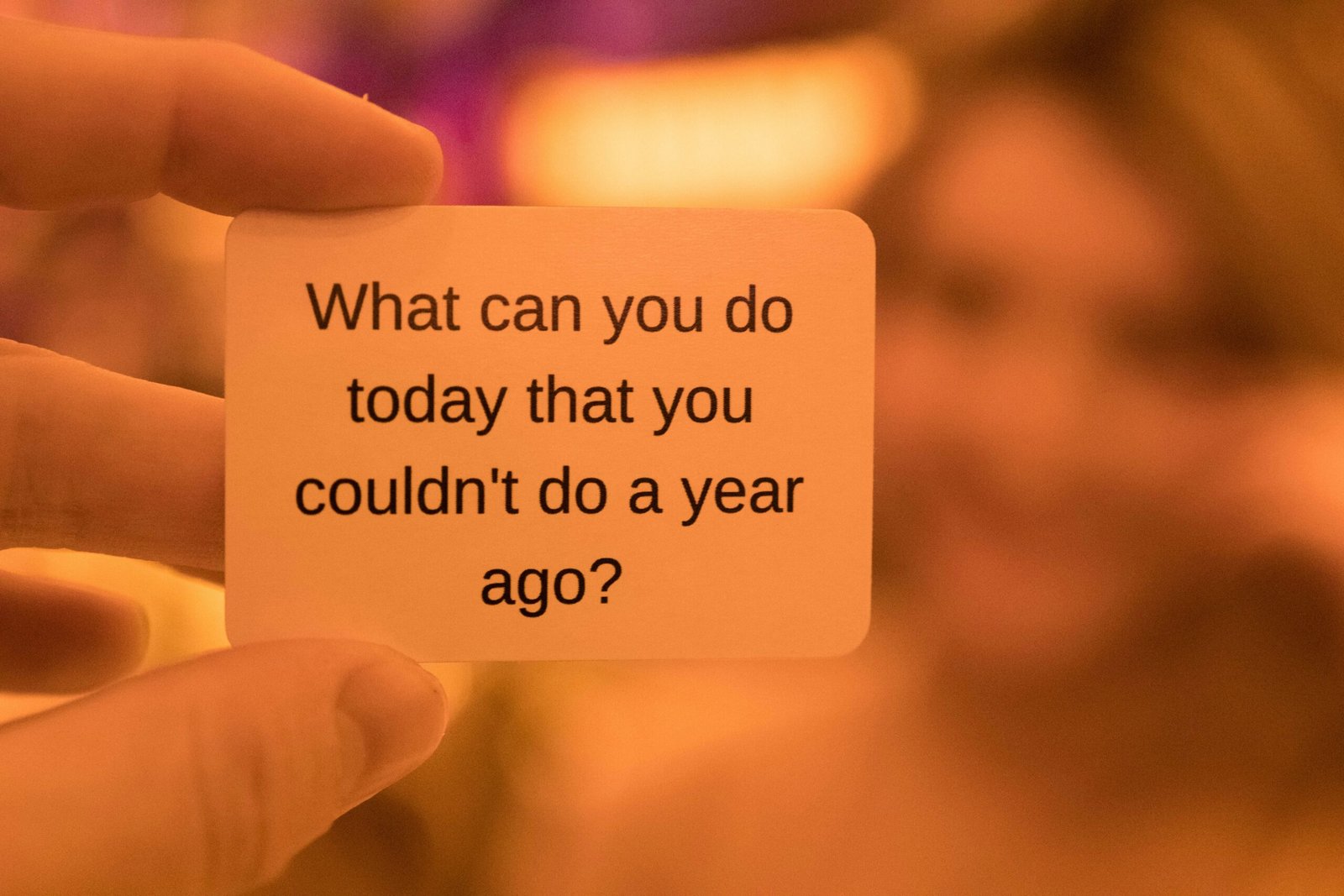
On January 2nd the gyms off Rainbow and Eastern are packed. By Valentine's Day they are back to normal. This happens every year, in every city, to people who genuinely wanted to change — and the standard explanation, that they lacked discipline, is almost entirely wrong.
Resolutions fail for structural reasons. Once you can see the structure, you can build something that survives February.
Four reasons January goals collapse
1. The date is arbitrary and your life is not. January 1 has no relationship to your actual capacity. In this city, January is when the convention calendar restarts, hospitality workers come off the hardest six weeks of the year, and everyone is financially recovering from December. Starting a demanding new regime at your lowest-capacity moment is a design flaw.
2. The goals are outcomes, not behaviors. "Lose thirty pounds" is a result. You cannot do it on a Tuesday. "Walk before work three mornings a week" is a behavior, and behaviors are the only things a person can actually execute.
3. Everything changes at once. New diet, new gym, new sleep schedule, no drinking, new budget — all starting Monday. Self-regulation is a limited resource in any given period. Loading five simultaneous demands onto it guarantees the whole structure falls together.
4. The all-or-nothing rule does the real damage. Not the missed day — the interpretation of the missed day. Researchers call it the abstinence violation effect: one lapse gets read as proof the effort has failed, which justifies abandoning it entirely. The person who misses Wednesday and goes Thursday is fine. The person who misses Wednesday and concludes they are undisciplined is done.
The gap between wanting and doing
There is a useful distinction between the motivational phase — deciding you want something — and the volitional phase — actually doing it under real conditions.
January is almost entirely motivational. It generates intention and no infrastructure. Then it meets a Tuesday when you worked a double, your kid was up at 3 a.m., and it is 108 degrees, and the intention has nothing to hold onto.
The interventions that consistently outperform willpower are all about infrastructure:
Implementation intentions. Not "I'll exercise more" but "When I get home Monday, Wednesday, and Friday, I will change clothes before sitting down." Specifying when, where, and after what roughly doubles follow-through in the research literature. It works because it removes decision-making from a moment when you are depleted.
Making the first step trivially small. The goal is not the workout; the goal is putting the shoes on. Once the behavior is stable, size it up. Almost everyone reverses this order and fails.
Environment over intention. Move the obstacle. If the gym is twenty-five minutes away across the valley in traffic, you will not go. If the phone is in another room, you will sleep. Environment beats resolve on ordinary days, which is most days.
One thing at a time. Pick a single change and hold it for six weeks. It is the least appealing advice and the most effective.
Plan the lapse in advance. Decide now what you will do the first time you miss. That sentence — "I will simply resume the next day, and it means nothing" — is often the whole intervention.
When the goal is not really the goal
There is a category of resolution that is not about the behavior at all. "Get in shape" that is actually "stop feeling ashamed when I see photographs." "Be more social" that is actually "I am lonely and it frightens me." "Finally get organized" that has been on the list for eleven years and may be undiagnosed ADHD rather than a discipline problem.
These do not respond to better systems, because the system is not what is in the way. They tend to respond to being named honestly, which is easier to do out loud with someone else than alone in your head.
A few signs the resolution is standing in for something clinical:
- The same goal, unmet, every year for years
- Motivation that is entirely shame-driven — you are running from something rather than toward it
- Total inability to start, despite genuinely caring, which is more often executive function than laziness
- A flat, joyless January where nothing sounds appealing, which is a depression question, not a goals question
- Goals about drinking or gambling that keep quietly failing
The particular shape of a Las Vegas January
Two local factors deserve mention. Convention season restarts immediately, so a large part of the workforce enters January at full tilt rather than in a quiet reset. And the post-holiday financial picture in a tipped-income economy can be genuinely grim, since December's earnings vary wildly and January is one of the slower months in some sectors.
That is worth accounting for rather than ignoring. A January plan that assumes a calm month is planning for a city other than this one.
A better version of the whole exercise
Try replacing the resolution list with three questions:
- What one behavior, if it became automatic, would make the biggest difference in twelve months?
- What is the smallest version of it I could do this week without rearranging my life?
- What will I do the first time I miss?
That is the entire method. It is unglamorous and it substantially outperforms a list of five ambitious goals written on December 31st.
If you have been trying the same thing for years
Repeated failure at the same goal is not a character verdict; it is data. Usually it means the goal is aimed at a symptom rather than a cause, or that something — ADHD, depression, anxiety, an untreated drinking pattern — is quietly consuming the capacity the plan requires.
That is exactly the kind of thing therapy is good at, and it is a great deal more productive than trying harder in January.
Brighter Tomorrow Therapy works with adults across the Las Vegas valley on change that holds, in person at our east valley and northwest offices or by secure video anywhere in Nevada. If your list has been the same for a while, book a session and let's look at what is actually in the way.